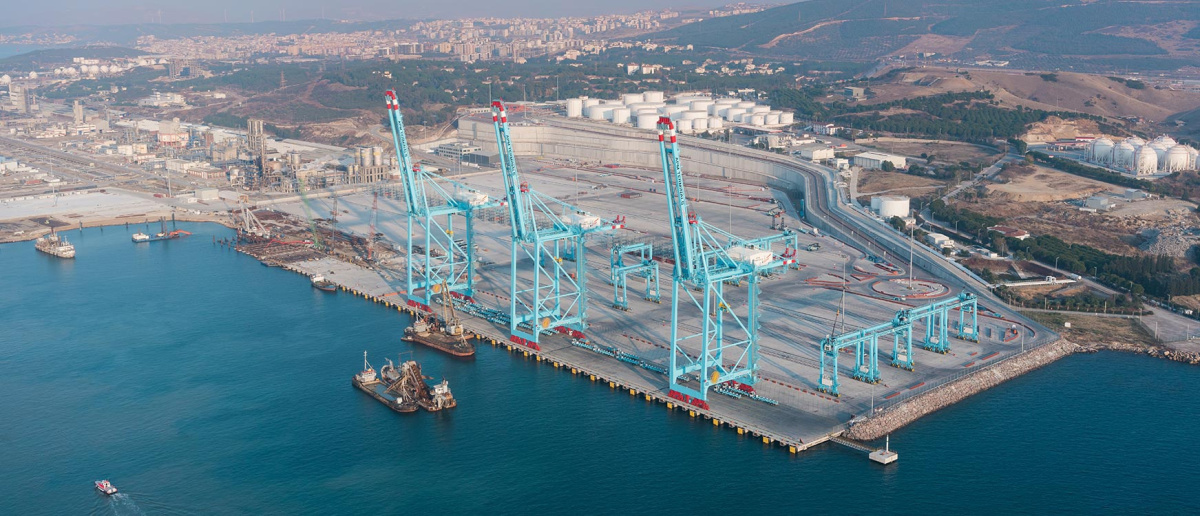
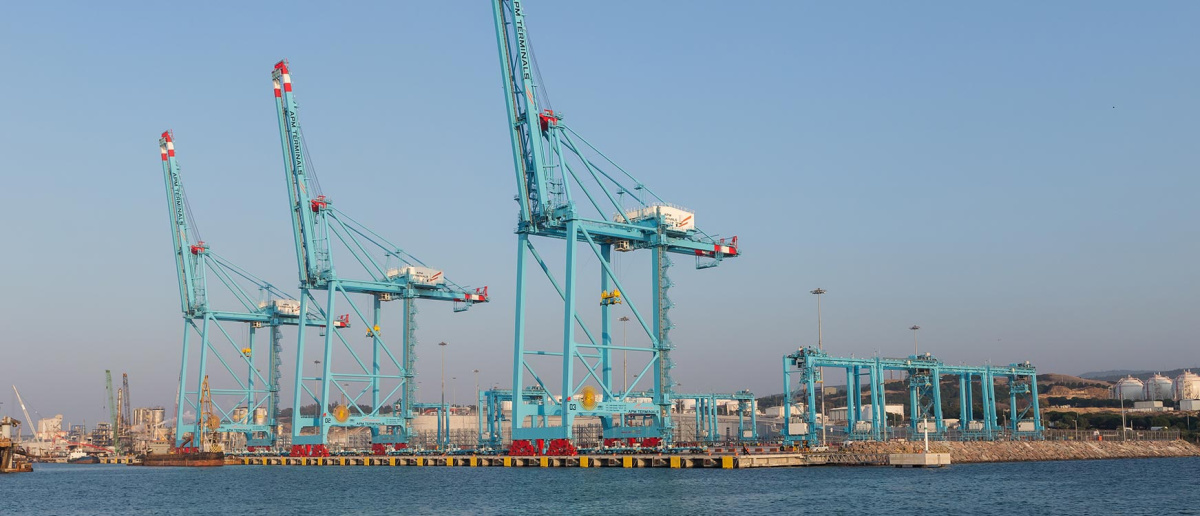
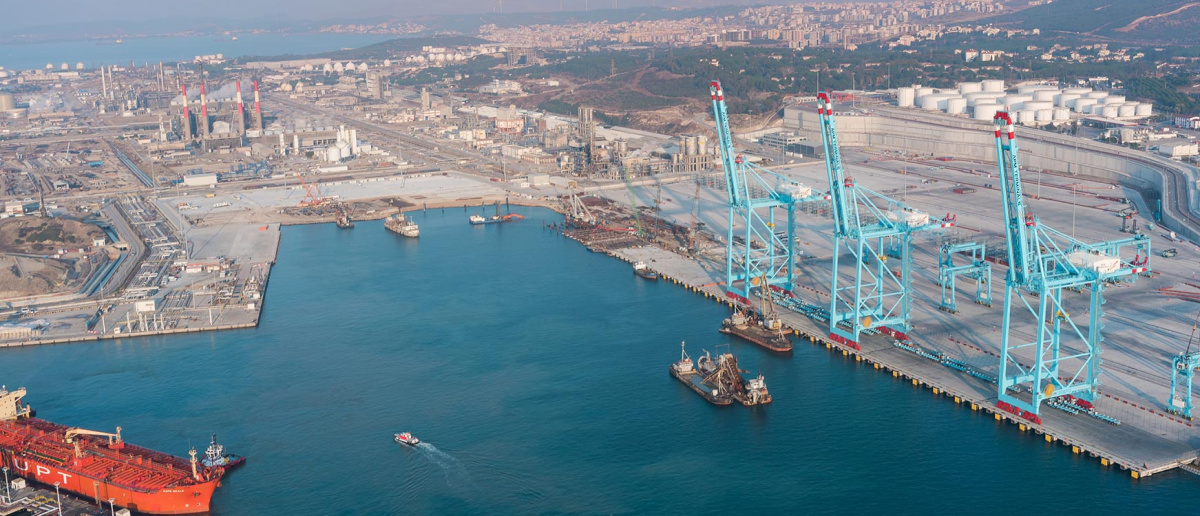
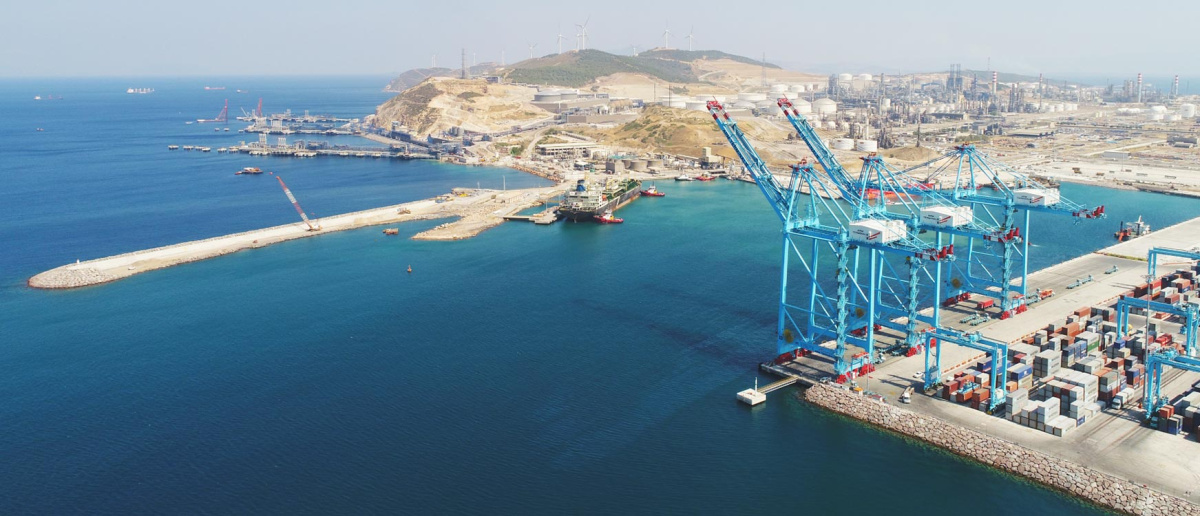
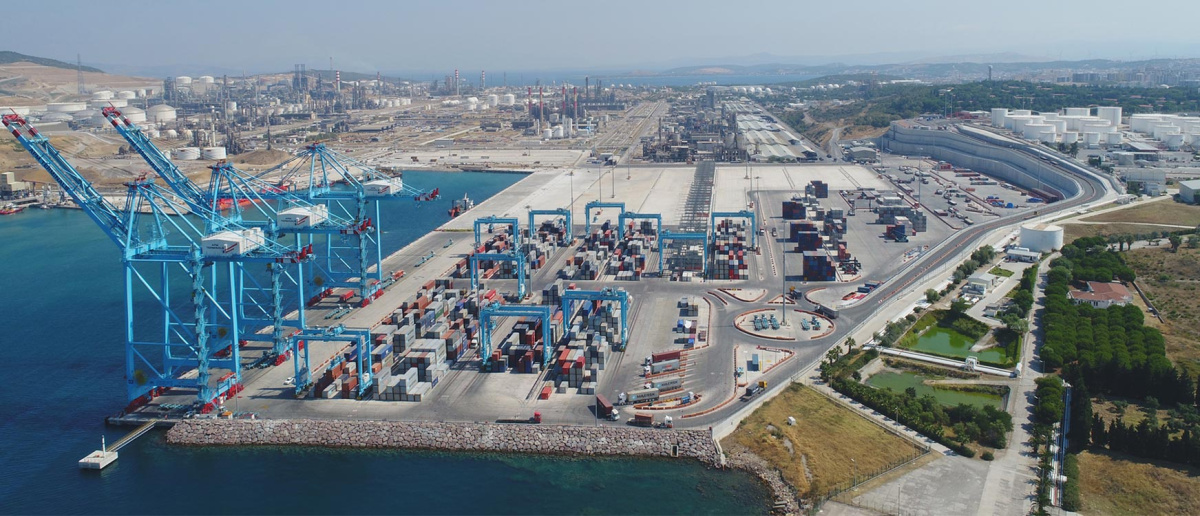
The Petkim Container Port Project is a crucial part of Socar Turkiye's "Value-Site 2023" initiative, which integrates "Refinery-Petrochemicals-Energy-Logistics." This investment aims to meet the current and future logistics needs of the Petkim Peninsula by increasing handling capacity. The first phase of this project, carried out by Petlim Limancılık A.Ş., a 100% Petkim subsidiary, was delivered in 2015, with the second phase completed in 2017.
The project was constructed for APM Terminals. Initially designed with a capacity of 1.5 million TEU, the Petkim Container Port—distinguished as the first port capable of accommodating 18,000 TEU container vessels—was expanded together with its back-up areas to reach a total container handling capacity of 4.5 million TEU, thereby becoming the largest integrated port in the Aegean Region.
For container storage operations, a total logistics area of 48 hectares was developed, comprising 42 hectares within the port area and 6 hectares in the back-up service area.
Major Construction Works
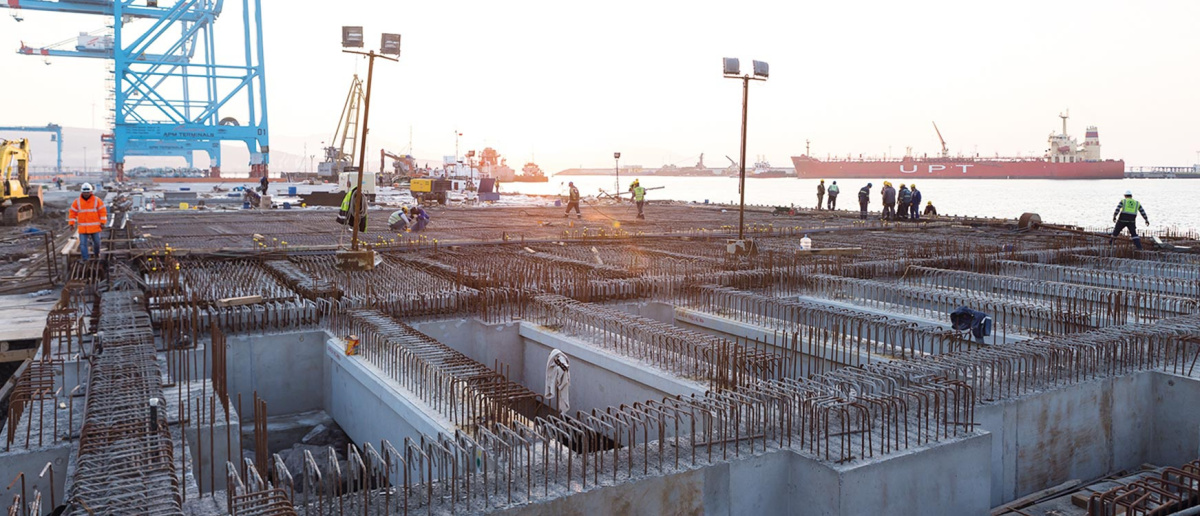
Some of the principal construction activities carried out within the scope of the port construction are listed below:
-
Removal and disposal of 6,200,000 m³ of excavation material from the site and marine reclamation using 3,000,000 m³ of fill material
-
Dismantling of the existing breakwater from both land and sea, followed by construction of a new 370-meter-long breakwater using 2,500,000 tons of fill material
-
Construction of a 700-meter-long quay wall, formation of the sub-quay slopes, and execution of slope rock armoring works
-
120,000 meters of jet grout works carried out both on land and offshore
-
Demolition of the existing block-type quay and construction of a new piled quay structure
-
Execution of rock armoring and fill protection works beneath the quay
-
Infrastructure works over a 440,000 m² back-up area, including 60 cm thick yard concrete pavements, construction of RTG crane rail beams, and concrete paving works using a concrete finisher
-
Ground improvement using impact crushed stone columns (238,393 m)
-
Bored pile and shoring works, including 43,366 m of bored piles
-
Construction of soil-nailed walls using multi-strand anchoring systems
-
Construction of reinforced earth walls (2,500 m²)
-
Construction of 14,500 m of asphalt-paved access and internal port roads
-
Installation of 50-meter-high high-mast lighting poles
-
Construction of infrastructure systems including electrical, drainage, stormwater, potable water, sewerage, and fire-fighting networks
-
Construction of concrete yard pavements, a reinforced concrete framed substation building, and a water reservoir
-
Construction of a lighthouse
During the execution of the project, more than 50 excavators, over 200 trucks, and more than 30 cranes were deployed on site.
Electrical and Energy Infrastructure
Within the scope of the project, all facilities required to meet the energy demand of the container terminal were constructed, including the high-voltage switchgear building, installation of transformers and switchgear panels, high-voltage cable laying, connection works, testing, and commissioning.
In addition, the design, supply, and installation of low-voltage distribution panels, cable routes, and cabling systems required for yard operations were included in the project scope. For port area lighting, the supply and installation of lighting poles, as well as the transformer kiosks and electrical panels required for their power supply, were also executed under this project.
Dredging Works
As part of the project, 2,000,000 m³ of seabed dredging was performed by Kanuni D.S., including rock breaking and dredging operations in rock formations with a compressive strength of up to 150 MPa.